
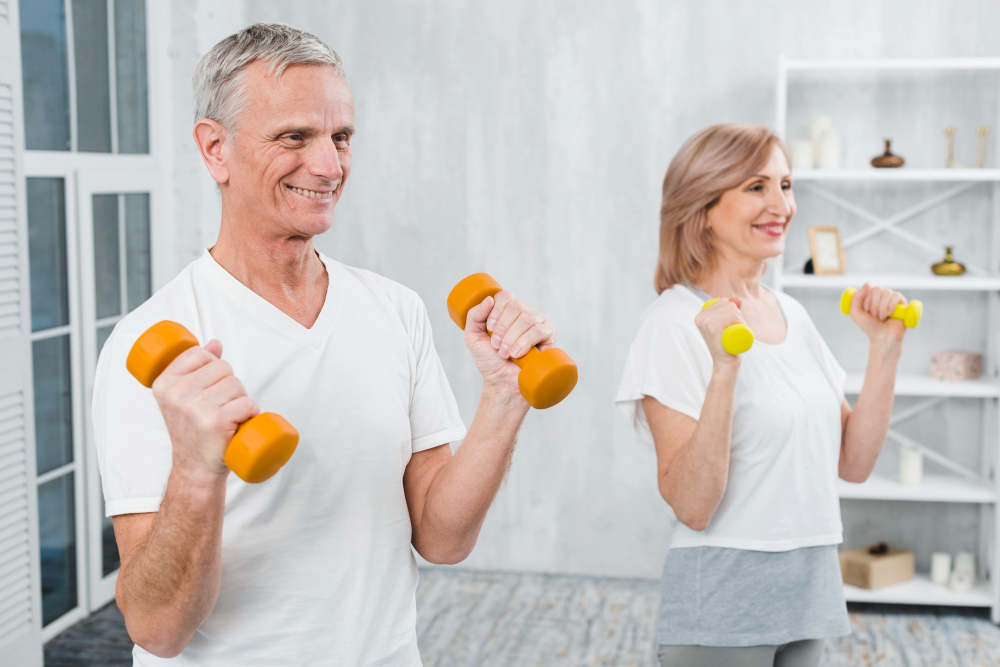
In the field of longevity medicine, the focus is shifting away from simply adding years to life and toward adding life to years. Among the foundational pillars of a long, vibrant lifespan, strength training stands out as one of the most potent tools—not just for maintaining muscle mass but for optimizing metabolic health, enhancing mobility, and preserving independence well into advanced age.
Why Strength Training Is Essential at Every Age
While cardiovascular exercise has long been emphasized for heart health, resistance training is equally, if not more, critical in the context of aging well. Muscle mass naturally declines with age—a phenomenon known as sarcopenia—beginning as early as our 30s and accelerating in the decades that follow. Without intervention, this loss contributes to frailty, insulin resistance, falls, fractures, and eventually, reduced lifespan.
Strength training helps to:
- Preserve and build lean muscle mass
- Improve bone density, reducing fracture risk
- Enhance insulin sensitivity and metabolic flexibility
- Support cognitive function via increased neurotrophic factors
- Boost hormonal balance, including testosterone and growth hormone
- Promote better mobility, posture, and balance
From a longevity perspective, maintaining strength isn’t just about fitness—it’s a biological necessity for aging with vitality.
The Longevity Lens: Moving from Reactive to Proactive Medicine
In emergency medicine, we often meet patients in crisis—after a fall, a heart attack, or a complication of chronic disease. These events frequently stem from preventable, lifestyle-related decline. Longevity medicine, by contrast, emphasizes preventative, proactive, and precision-based interventions designed to extend healthspan and delay the onset of age-related deterioration.
Incorporating strength training into a person’s routine is a prime example of this approach. It is a low-tech, high-yield intervention that modifies many hallmarks of aging—from mitochondrial function and inflammation to hormone regulation.
Dr. Peter Attia, a leading voice in the longevity field, underscores the importance of strength training as a key predictor of functional independence in later life. In his book Outlive, he introduces the concept of the “Centenarian Decathlon”—a set of physical tasks one should train for now to ensure capability at age 100. At the core of this model is strength, which he calls “the most underrated driver of long-term health.”
Start Here: Simple Strength Exercises and Guidelines
Strength training doesn’t have to mean heavy barbells or complex gym equipment—especially at the beginning. The key is consistency, progression, and proper form.
Here are some foundational movements to build a strength routine around:
Basic Movements (No equipment required)
- Bodyweight Squats – Builds lower body strength and improves balance
- Push-Ups (or Incline Push-Ups) – Strengthens chest, shoulders, and arms
- Glute Bridges – Supports hip stability and core strength
- Wall Sits – Enhances lower body endurance
- Plank Holds – Core strength and postural control
Add Resistance as You Progress
- Dumbbell Rows – Improves upper back and arm strength
- Goblet Squats – Adds load to squats using a kettlebell or dumbbell
- Resistance Band Pull-Aparts – Shoulder stability and posture
- Deadlifts (with kettlebell or barbell) – Full-body movement, functional strength
How Often Should You Strength Train?
- A starting point for most people is 2–3 sessions per week, with 24–48 hours of recovery between.
- Each session can be 30–45 minutes, focusing on full-body compound movements.
- The goal is to stimulate, not exhaust—especially for beginners or those in midlife and beyond.
- As Peter Attia notes, strength training is about long-term resilience, not short-term intensity.
Individualization matters: Factors like injury history, age, goals, and baseline fitness will shape how you approach training. Longevity medicine emphasizes personalization—ideally guided by a healthcare provider or movement specialist who understands your health profile.
Peptides and Performance: The Role of BPC-157 and TB-500
For individuals training consistently—especially those over 40—recovery becomes as vital as resistance. This is where peptides like BPC-157 and TB-500 have gained interest, particularly in performance optimization and regenerative medicine.
What Are BPC-157 and TB-500?
- BPC-157 (Body Protective Compound) is a synthetic peptide derived from a gastric protein. It has shown promise in promoting the healing of tendons, ligaments, muscle tissue, and even gut lining.
- TB-500 is a synthetic version of thymosin beta-4, a naturally occurring peptide involved in cellular repair and regeneration.
When used in combination, this peptide stack is believed to:
- Accelerate recovery from training or soft tissue injuries
- Reduce inflammation and muscle soreness
- Improve vascular flow and nutrient delivery to muscles
- Support connective tissue integrity and resilience
Conclusion: Strength as a Lifelong Investment
Strength training is one of the most evidence-based, accessible, and transformative tools for anyone looking to extend their healthspan. In the context of longevity medicine, it becomes a cornerstone of a preventative lifestyle—one that doesn’t just treat disease but aims to prevent it altogether.
When paired with recovery-supporting strategies such as targeted peptide therapy, strength training becomes not just sustainable, but optimizable—allowing the body to remain strong, resilient, and biologically young well into later decades of life.
Suggested Reading & Resources:
- Peter Attia, Outlive: The Science & Art of Longevity (2023)
Attia, P. “The Centenarian Decathlon.” peterattiamd.com